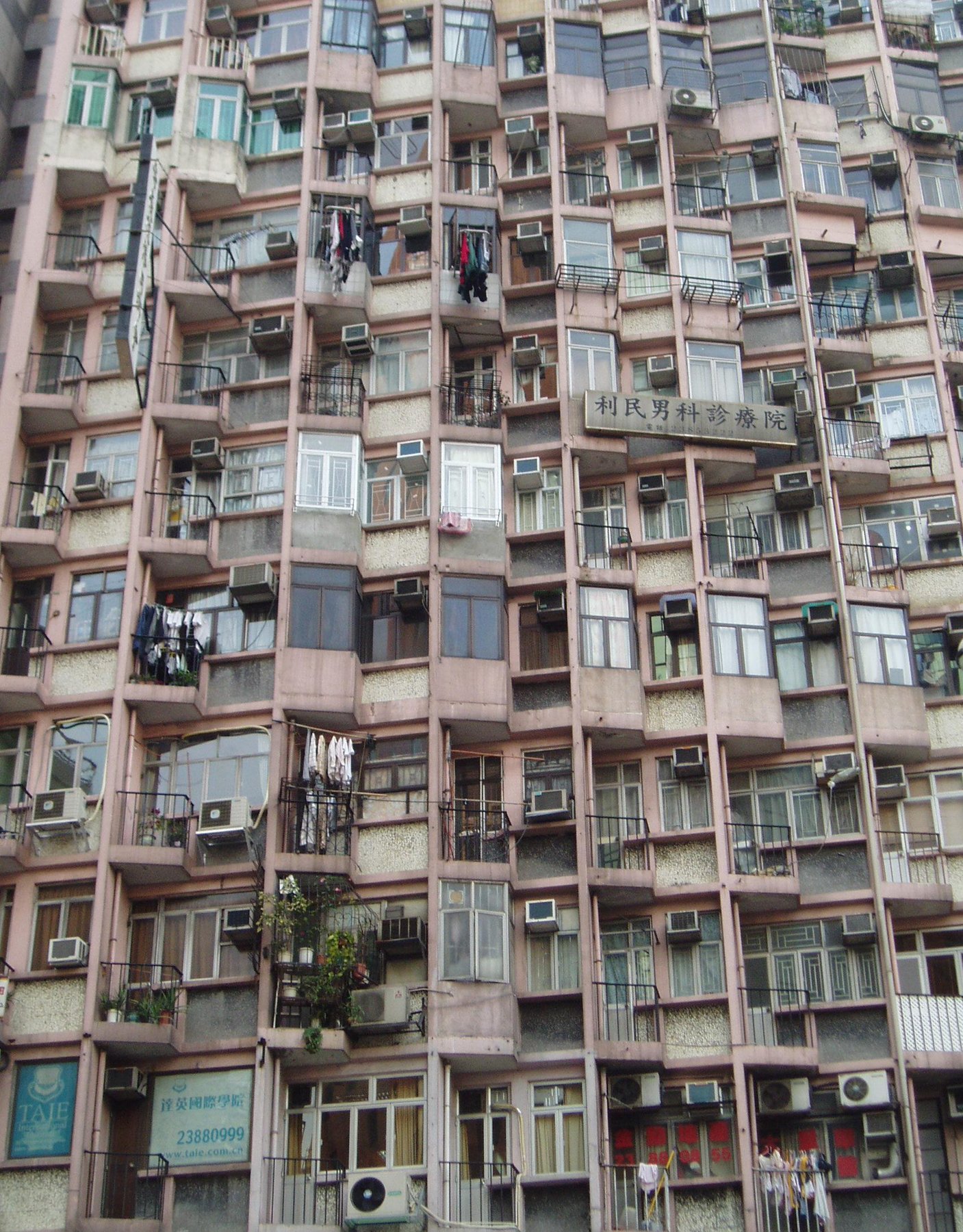
Standing in front of a tall building and tilting the camera upwards makes its vertical edges converge in the photograph. This is a normal perspective effect. It can emphasize height or distract from a descriptive representation. First decide whether you want to show the upward view or render the building with approximately parallel verticals.
Keep the camera level
With the camera level, vertical lines remain parallel in a conventional rectilinear projection. The drawback is that the roof may not fit from ground level while much foreground appears. Greater distance can help if a suitable position exists. A higher permitted viewpoint changes the possibilities too.
A wider lens alone does not remove convergence if you continue tilting upwards. With a level camera, it can include more of the building but adds foreground and potentially stretched edge areas. Check not only whether everything fits but how entrance, windows and neighbouring buildings relate.
Shifting differs from tilting
A shift lens moves the recorded framing within a larger image circle while the camera stays level. This includes more of the upper building without introducing the same tilt. The tilt function of a tilt-shift lens instead concerns the focus plane. These movements perform different jobs.
Specialist equipment is not compulsory for occasional architectural photographs. A carefully composed frame with border allowance can often be aligned afterwards. Strong corrections can stretch edge regions substantially and sacrifice considerable image area, however. A better starting position requires less geometric alteration in editing.
Correct with judgement
Apply a suitable lens correction first if straight lines are also curved. Then align perspective using genuinely vertical building edges. Do not mistake intentionally angled elements or an irregular historic structure for camera error. Check several references instead of treating one incidental edge as definitive.
After correction, inspect proportions. A building with perfectly parallel lines can still look unnaturally wide or tall. Check window shapes, doors and familiar round elements. Finalize cropping afterwards and ensure roof and base retain enough space. Correction should make the representation clearer, not merely satisfy a grid.