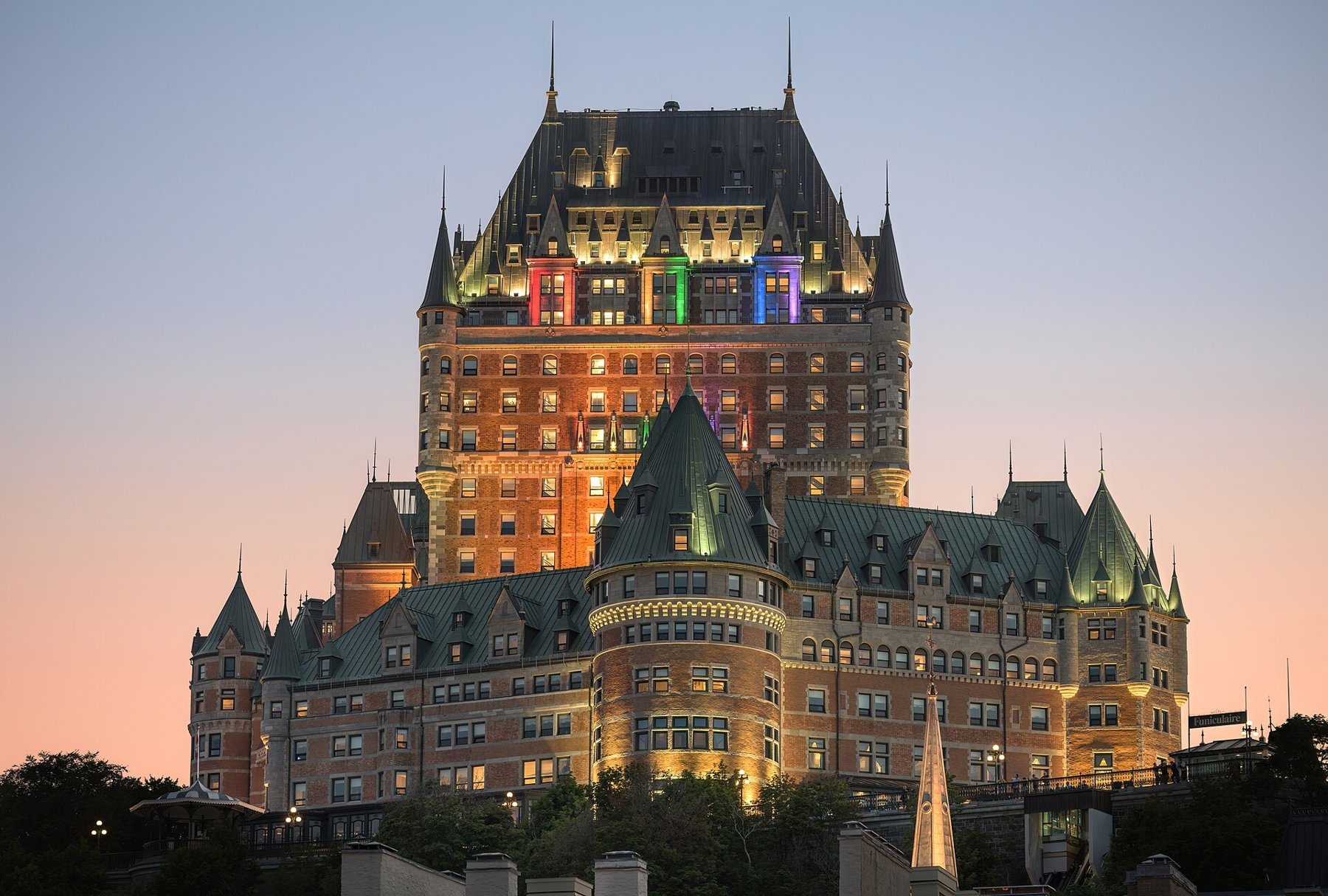
Blue hour does not mean that you have exactly sixty minutes. The useful interval changes with season, location, cloud cover and viewing direction. What matters is the relationship between sky, buildings and lamps. A photograph may feel balanced before the sky becomes deep blue; later, the same windows may burn out while the facades disappear completely.
Be ready before the best light
Find the position while enough daylight remains. Check frame edges, distracting signs and potential reflections in water. Place a tripod without blocking access and align the camera. A considered composition before dusk saves time later when the light changes particularly quickly.
Repeat the same composition at intervals. Compare not only sky colour but also detail in dark roofs and bright signs. The strongest photograph often has the most convincing brightness relationship, rather than being the latest or most saturated frame.
Movement belongs to the exposure
A longer exposure keeps buildings sharp but can blur people, boats and trees. Decide whether those traces belong in the scene. If a recognizable person matters, also make a shorter version. Raise ISO if necessary rather than assuming that a tripod solves all movement.
For light trails, exposure duration affects how completely vehicles cross the frame. Time the start to the traffic and then check whether bright trails cover important building edges. A quieter street can say more about architecture than the largest possible number of red and white lines. Also check the railing or bridge beneath the tripod: passing vehicles can transmit vibration even though the camera appears to be firmly supported.
Keep colour coherent
A fixed white balance makes frames easier to compare. Do not automatically neutralize the sky: its cool colour can contrast with warm windows. Inspect individual colour channels in intense signs, where detail can disappear although the overall scene looks dark. Make the final selection from the whole photograph and retain a believable progression between illuminated surfaces and shadow.