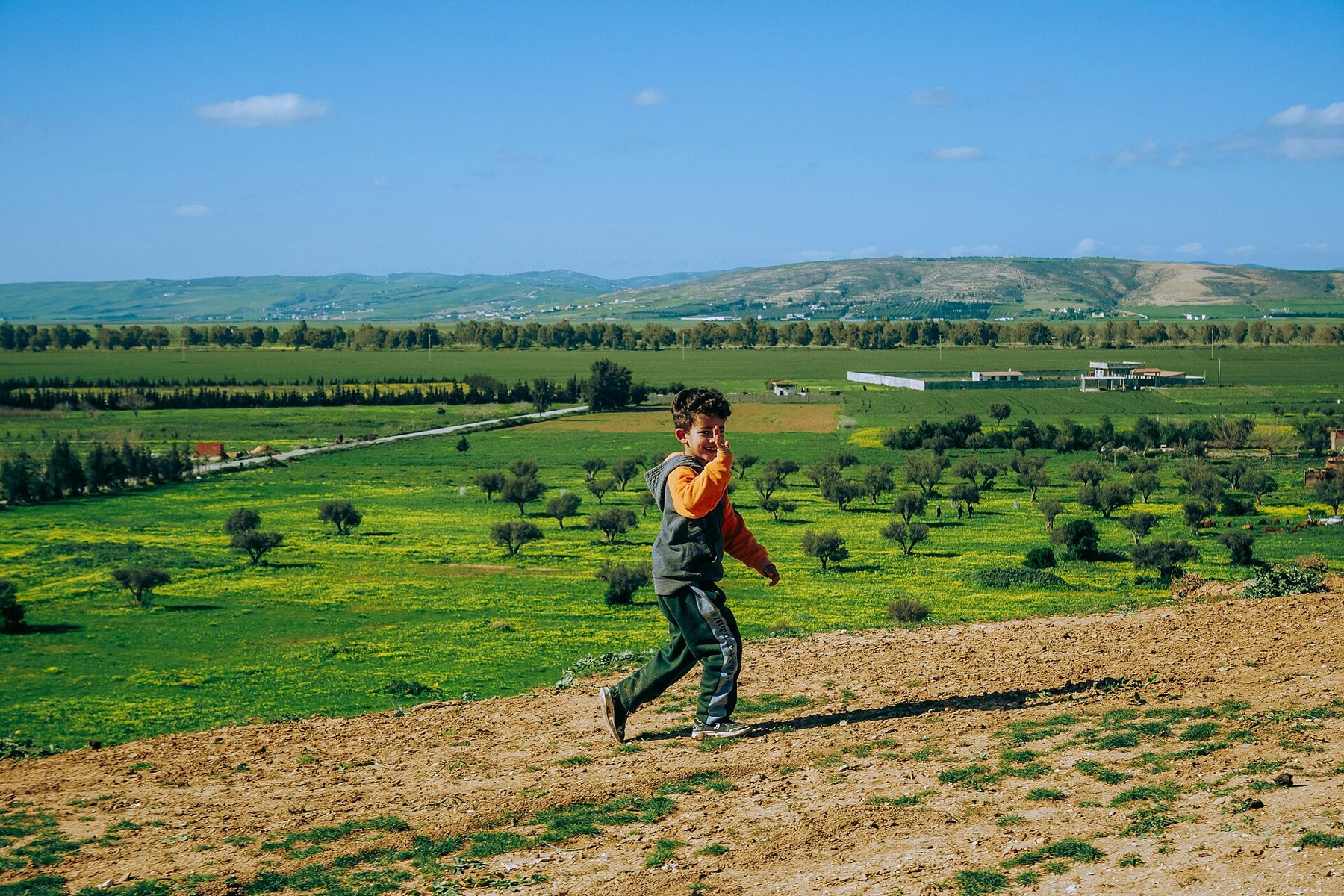
While running, jumping or playing, children often change direction and expression faster than you can adjust a setting. Preparation reduces decisions during the moment. Choose an uncluttered area with even light and enough room. Aim for a readable action and clear face rather than the longest possible uninterrupted burst.
Watch the movement first
Observe where the action repeats: the highest point of a small jump, the end of a slide or the instant before running starts. These may offer a brief pause or predictable expression. Position yourself so you do not need to walk backwards or obstruct the play area. A fixed position also helps maintain a consistent background.
Choose a suitable height rather than photographing only from above. Eye level changes how the surroundings relate to the child. A lower viewpoint may make a jump clearer but can also bring distracting objects behind the head. Check frame edges before starting and move sideways if needed.
Short exposure and continuous focus
For fast running, 1/1000 second is a useful starting test; quieter movement may need less. Inspect hands and face at magnification. A sharp face with slightly blurred feet can describe the action well. Judge the picture rather than counting every small movement trace as a fault.
Use continuous autofocus and suitable face or eye detection if it works reliably. Begin acquisition before releasing. A somewhat larger focus area may stay on unpredictable movement more easily than a tiny point. Still check whether another child or the background takes over. A very wide aperture saves light but reduces focus tolerance.
Short sequences rather than continuous firing
Take a short sequence around the expected moment, then lower the camera. This keeps selection manageable and preserves connection with the situation. Check after a sequence whether the settings work. If every frame shows the same problem, another long burst will not help; change shutter speed, focus area or position first.
Make different kinds of pictures: a wide view of the action, a closer expression and a detail of hands or toys. Do not demand constant smiling. A concentrated expression may explain the activity better. Breaks and finishing at an appropriate moment belong to a relaxed session, especially once attention has moved to another game.