Glossy versus matte is not a universal quality ranking. The surface affects reflections, perceived contrast and how you view the print. A photograph handled in an album presents different requirements from a large picture opposite a window. Compare actual paper samples under the intended lighting wherever possible.
Include reflections in the decision
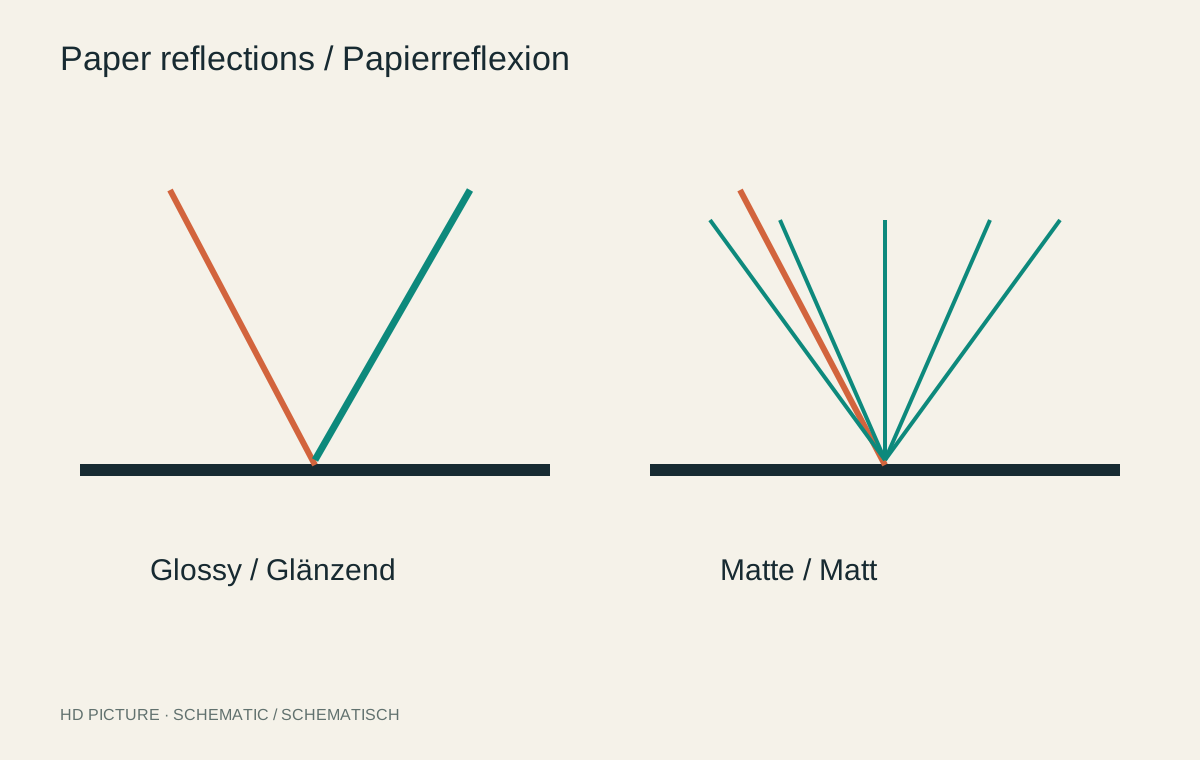
A glossy surface can show deep tones and crisp details impressively, but lamps and windows may reflect clearly. Hold a sample at the intended location and move in front of it. What matters is not just the single angle from which it looked attractive in a shop.
A matte surface spreads reflections more broadly and may look calmer from changing viewpoints. That does not mean it has no reflections. Texture, paper white and printing process also affect appearance. Terms such as satin, silk and lustre are not completely standardized between providers.
See the subject on both papers
A detailed night scene with deep shadows behaves differently from a bright portrait with gentle transitions. If uncertain, order the same small photograph on two surfaces. That lets you compare the paper itself rather than simultaneously comparing different subjects.
Inspect dark clothing, fine hair and smooth colour transitions. Ask whether important distinctions remain visible and whether the surface suits the photograph. Pronounced paper texture may complement a quiet landscape but distract from tiny lettering or very fine technical detail.
Consider framing and handling
If the print will sit behind glazing, the glazing also affects reflections. Matte paper alone will not solve every glare problem. Use appropriate separation from the glazing and plan the frame as a complete system.
For frequently handled photographs, consider fingerprints and the sensitivity of the particular surface. Hold samples and finished prints by their edges where possible. Do not test durability by placing heavy objects directly on an unprotected image. The manufacturer’s care instructions provide a better basis.
Record a decision you can repeat
Record the paper name, finish and provider for a successful proof. “Matte” alone may not identify a future reorder. When extending a series, different papers can look noticeably different even with identical files.
For important work, prepare a print version for the chosen material. A modest shadow adjustment may be more useful than assuming one surface is fundamentally unsuitable. The physical comparison reveals which combination communicates your picture most effectively.