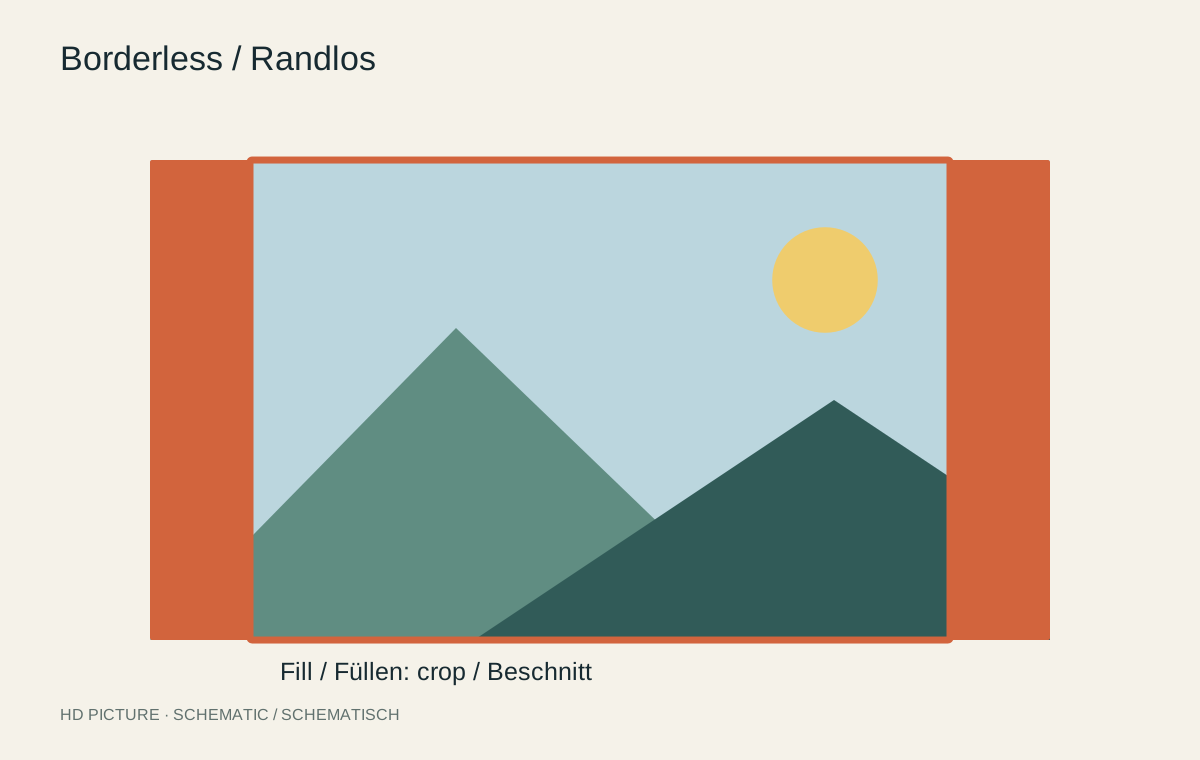
A borderless print cannot simultaneously show every image in full and fill every paper shape. When aspect ratios differ, either cropping or borders are necessary. Do not leave that decision accidentally to the ordering software, especially when faces, lettering or important details lie near the edges.
Check the ratio before the size
A 6000 × 4000 pixel file has a 3:2 ratio and fits proportionally on 30 × 20 cm. A 30 × 24 cm format instead has a 5:4 ratio. A borderless print therefore removes area from the sides of the original landscape frame. More pixels do not prevent this geometric mismatch.
In this example, the height can remain 4000 pixels while the width becomes 5000 pixels for a 5:4 ratio. A total of 1000 pixels of width disappears. Whether that comes from the left, right or both sides is a compositional choice. Automatic centre cropping is only one possibility.
Create a crop in the target ratio in your editor and position it deliberately. Check that a person’s gaze still has room and important objects remain complete. If no satisfactory composition is possible, choose another paper shape or allow a border.
Allow separately for production trimming
Even with a matching ratio, borderless production may use slight enlargement or trimming tolerance. The amount depends on the product. Avoid placing important lettering and faces directly at the outermost edge. Read the specific provider’s instructions and preview.
A very thin border added yourself may look uneven because of tolerances. If consistent borders are important, establish how they are produced and what external dimensions result. A preview is helpful, but does not promise a mathematically exact cut without tolerance.
Inspect each variation separately
A mixed order containing portrait, landscape and square images needs more than one global setting. Open every image preview. Watch for automatic fill modes that may reactivate after changing the format.
Keep the uncropped master and export a clearly named print copy. After ordering, check the confirmed dimensions and quantities. For an important series, a small test before producing many copies helps establish whether the intended borders and compositions arrive as expected.