A large landscape book may look appealing, but does not automatically suit a collection dominated by vertical portraits. Format affects image size, page rhythm and handling. Before choosing decoration and type, place a few representative photographs on two or three possible page shapes. This reveals the compromises early.
Start with the collection
Do not merely count portrait and landscape frames; consider their importance. Most files may be small detail pictures while five broad landscapes are the main images. Those key photographs deserve sufficient space. A square book can combine orientations, but still requires deliberate borders and sizing.
Try a page with one main photograph, one with two related pictures and one with text. If only the spectacular double-page spread works, the format may be awkward for the rest of the book. Avoid assuming that every page must be completely filled with photographs.
Consider handling and readability
A large book needs room to open and is heavier to hold. A gift frequently viewed on a sofa may work better in a manageable size. A portfolio displayed on a table can serve different needs. Measure the available space and make a simple paper dummy if uncertain.
Check text at actual size. A caption comfortable on a large monitor may become tiny in a small book. Several small photographs on one page also lose detail. The number of pictures fitted in is not a measure of clarity.
Choose binding and template early
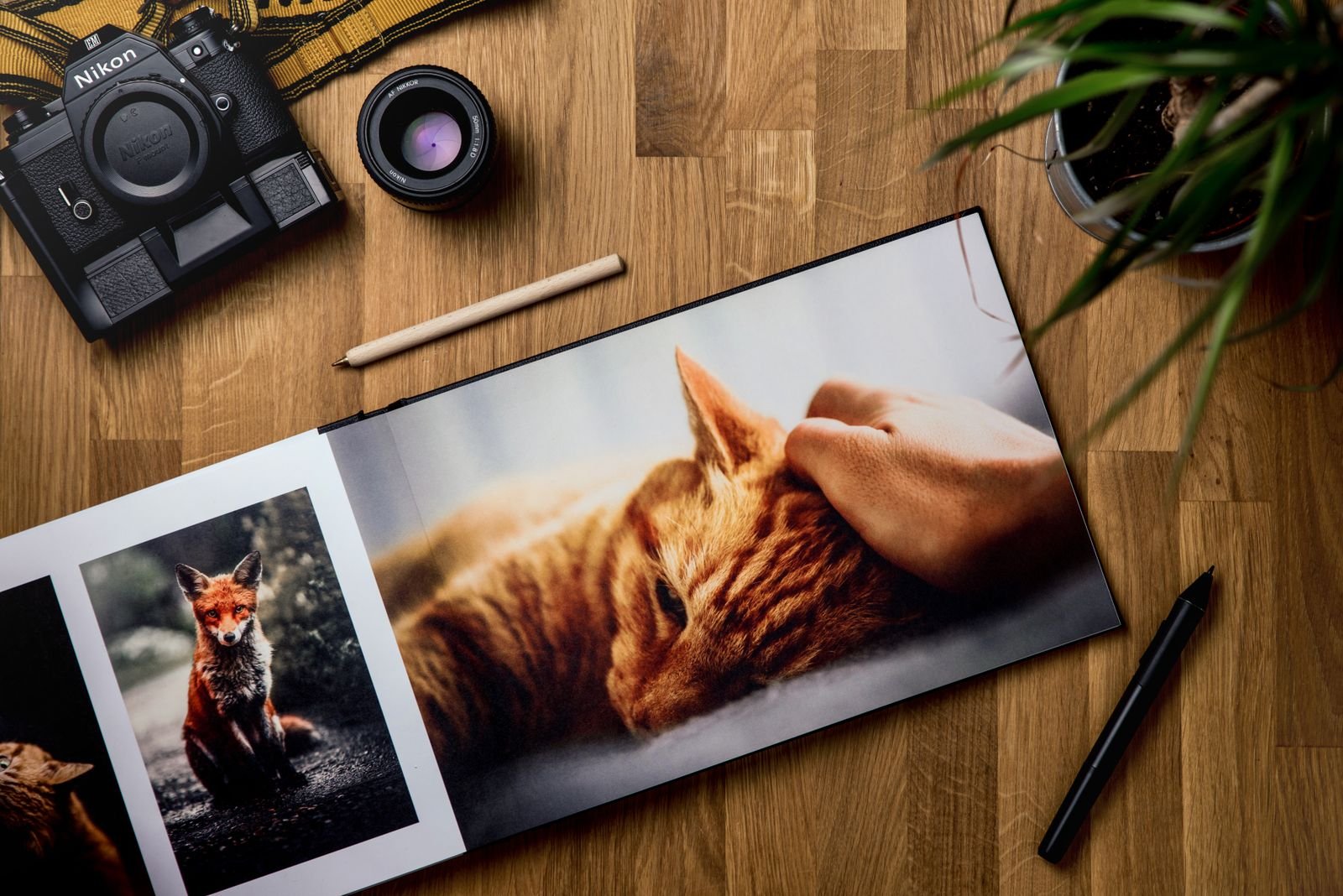
Ordinary and layflat bindings treat the centre differently. Do not place important faces casually across the gutter. Check available page counts, paper types and exact product dimensions before building an extensive design.
Changing format later can alter every crop. Keep original photographs independently of the book project and inspect every page after a change. For an important project, a sample or first single copy answers material questions better than hoping the screen preview explains everything.