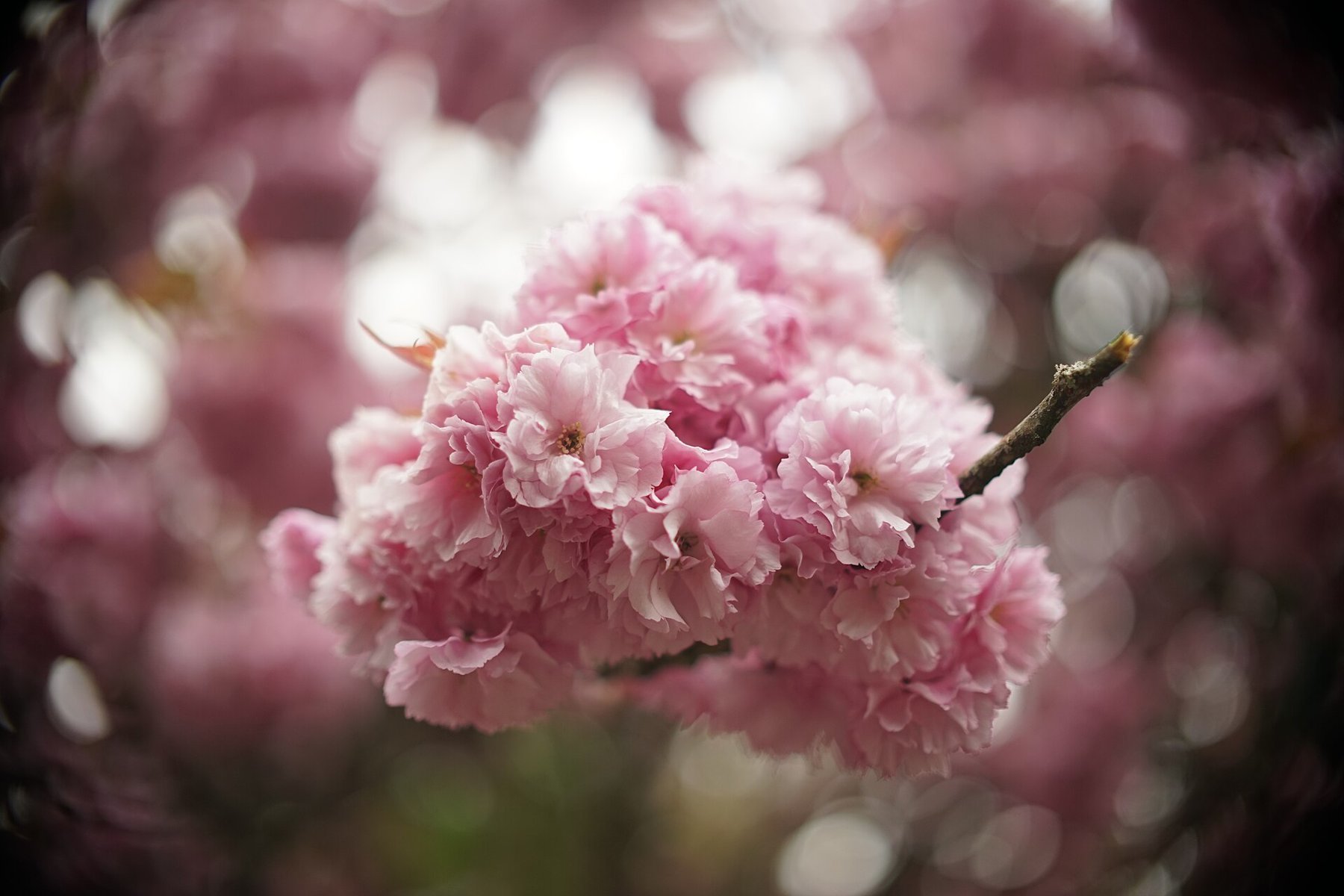
A blurred background may help a portrait, while the same setting can ruin the back row of a group photograph. Aperture influences depth of field: the range of distances we perceive as acceptably sharp in the finished image. This range has no hard boundary. Sharpness declines gradually in front of and behind the focused plane, and the visible result also depends on output size and viewing distance.
Small number, large opening
A setting such as f/2.8 describes a larger opening than f/8. With focal length, distance and focus unchanged, the larger opening produces less depth of field. It also transmits more light. Moving from f/4 to f/5.6 approximately halves the light reaching the sensor per unit of time. Similar brightness then requires a longer exposure or a higher ISO setting.
In aperture priority, A or Av, you choose the aperture while the camera adjusts exposure time. Watch the shutter-speed display: extra depth of field may come at the cost of motion blur from an overly long exposure. For a person who moves slightly, that is a different fault from a blurred background.
Distance is a second control
At close distances, the zone that appears sharp becomes much thinner. An aperture that seems sufficient for a distant building may cover only a narrow slice of a flower. Arrange important subject parts at similar distances from the camera where possible. With a row of small products, an off-centre camera position can create unnecessary distance differences.
Separation between subject and background also helps soften the background. A person standing directly against a wall may retain recognizable wall texture even at a wide aperture. Move them farther from it when the situation permits. This changes the appearance without immediately requiring another lens.
Two cups as a controlled comparison
Place two cups slightly staggered on a table and focus on the front label. Photograph first at a wide aperture, then at a smaller opening without moving camera or cups. The rear label will generally become clearer with the smaller opening. Because less light passes through, the camera must extend exposure time or raise ISO for similar brightness. A longer exposure is often harmless on a tripod with stationary cups; the same choice would need different consideration with people.
Then make both photographs from a closer position. The larger reproduction scale makes keeping both cups sharp more difficult. This demonstrates why an aperture number alone cannot fully describe depth of field. Apply it to a face: a close photograph at f/4 may show less depth than a more distant full-length portrait at the same aperture.
If only the rear cup matters, change focus rather than automatically stopping down farther. If both matter equally, arrange them nearer to the same distance. Arrangement is often a more effective control than an extremely small opening with its penalties in exposure time and fine detail.
Check the sharpness you need
Photograph the same subject at, for example, f/2.8, f/5.6 and f/11 without changing focus point or camera position. Compare the key detail and the nearest and farthest subject parts. Then choose the setting that supplies enough depth of field rather than automatically using the smallest opening. Very small apertures can soften fine detail through diffraction. For groups, careful arrangement in a few depth planes is often more effective than extreme stopping down.