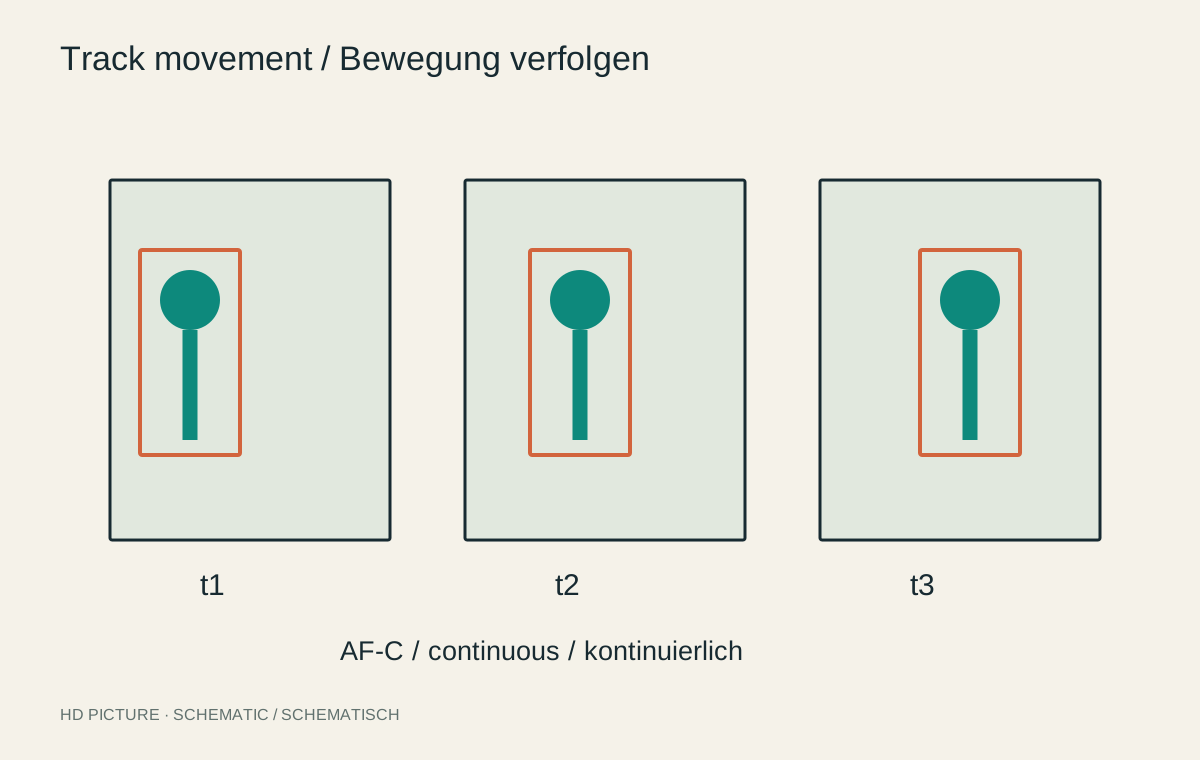
Autofocus has two decisions to make: where in the frame to look, and whether to hold the distance it finds or keep updating it. Focus mode answers the second question. Single autofocus suits an unchanged distance; continuous autofocus suits a distance that changes during shooting. Selecting a single focus point is independent of this choice. One point can also focus continuously.
Measure once and hold
Single autofocus is often called AF-S or One-Shot AF. With the usual button assignment, the camera focuses when you half-press the shutter and holds that distance while you maintain the half-press. This is straightforward for a still life or stationary facade: you decide when to measure again. Custom button assignments can change the exact operation.
The stored distance does not follow the subject. If the person steps towards you after focus confirmation, they may leave the sharp plane. The same happens when you sway forwards or backwards. Small movements matter at shallow depth of field. A confirmation beep therefore only indicates that focus was achieved at a particular moment.
Keep updating the distance
Continuous autofocus, often AF-C or Servo AF, updates distance while the assigned focusing control remains active. For a person walking towards you, it is usually the more appropriate starting point. Begin tracking before releasing the shutter so the system can acquire the subject. Keep the intended area over it and take short, deliberate bursts.
Tracking does not mean the camera understands your composition. If the active point moves onto the background, it may focus there. Subject recognition can help but may select the wrong face or animal. Check the displayed frame and correct selection when necessary. A larger search area gives the system more room but also includes more potential distractions.
Releasing before focus is achieved
Some cameras offer focus priority or release priority. With focus priority, a photograph may be delayed or prevented if sufficient focus is not detected. Release priority is more likely to preserve the intended moment or burst rate, but it does not guarantee sharpness. Available combinations differ between models and operating modes.
A camera that refuses to fire in low light is therefore not necessarily faulty. First check whether a low-contrast subject, insufficient distance or the priority setting is responsible. For a controlled test, choose a bright textured surface. Change only one setting so you can tell whether the delay really relates to focusing.
When tracking holds the wrong subject
A person walks behind a railing. If the railing remains sharp while the face softens, a larger focus zone may be precisely the wrong solution: it gives the camera even more high-contrast bars. Start tracking on an unobstructed part of the person and test whether a more targeted zone improves acquisition. If the system briefly loses the person, a less abrupt response to obstacles may help on some cameras. Check the manual for the actual setting; one choice is not right for every scene.
If the action instead switches quickly from a near person to a distant one, excessively persistent tracking can become a problem. Distinguish a brief obstruction of the same subject from a deliberate change of subject. Both can look similar to the camera but require opposite responses. Deliberately starting focus acquisition again may be faster than waiting for an automatic decision.
Also inspect the sequence over time. If only the first frame is soft, release may have begun before secure initial acquisition. If later frames soften, investigate tracking, obstacles or insufficient shutter speed. The order in which errors appear provides more information than one disappointing photograph.
A short everyday test
Ask someone to walk slowly towards you. Use a short exposure so motion blur does not conceal the comparison. First shoot with single autofocus acquired while the person was still farther away. Repeat with continuous tracking. Compare later frames as well as the first: does the sharp plane move with the face or remain behind it?
Next test a stationary person with the same tracking setup. Even an apparently still portrait can benefit from continuous focus when the person moves slightly. For an immobile product, single autofocus is often easier to control. Choose according to distance during capture, rather than a rigid division into portrait, landscape or sport.