A camera on three legs is not automatically motionless. A loose head, yielding soil or a strap moving in the wind can spoil a long exposure. Set up the whole chain from ground to camera body deliberately. Nominal load capacity alone does not describe how steadily a particular camera, lens and tripod combination behaves in wind.
Check the support before the camera
Place the feet on firm surfaces and check whether a leg sinks or slips. Lock the leg sections and spread them appropriately for the terrain. An unnecessarily raised centre column can make the arrangement more sensitive. Choose the required perspective first and use only as much height as the photograph needs.
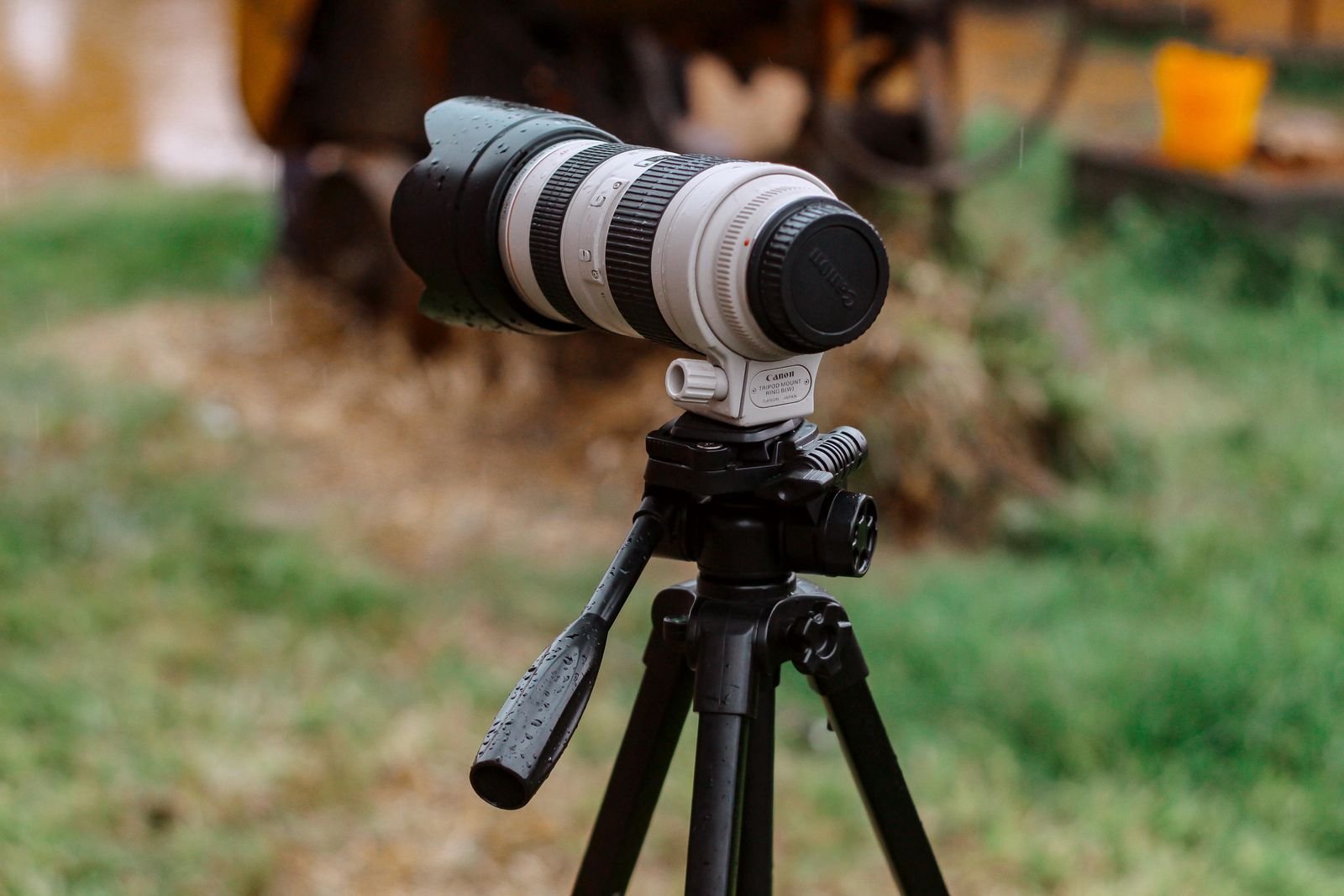
Check the quick-release plate on the body and its complete engagement in the head. Hold the camera when loosening a head, especially with a heavy lens. If the lens has a suitable tripod collar, using it can balance the load better. After tightening, the framing should not slowly sag.
Reduce contact and vibration
A self-timer or remote release avoids pressing directly during exposure. After a large adjustment, wait for vibrations to settle. On a DSLR, suitable mirror lock-up may help; other cameras offer different shutter options. Check their possible side effects rather than assuming every quiet setting is ideal.
Secure loose straps that flap in wind. Avoid touching the tripod unnecessarily during a long exposure. A bag used as ballast may help with some setups, but it must not swing like a pendulum and introduce movement. On a vibrating walkway or near heavy traffic, another position may achieve more than extra weight.
Use the finished frame as a check
Magnify a fixed detail after capture and repeat with a shorter exposure if necessary. Follow the manufacturer’s recommendation for stabilization on a tripod. If buildings are sharp and leaves soft, the support may already be working: the leaves themselves are moving. A tripod cannot stop that motion. Decide whether it belongs in the photograph or requires a shorter exposure.